
Some parts of my nutrition routine have become so familiar that I barely think about them.
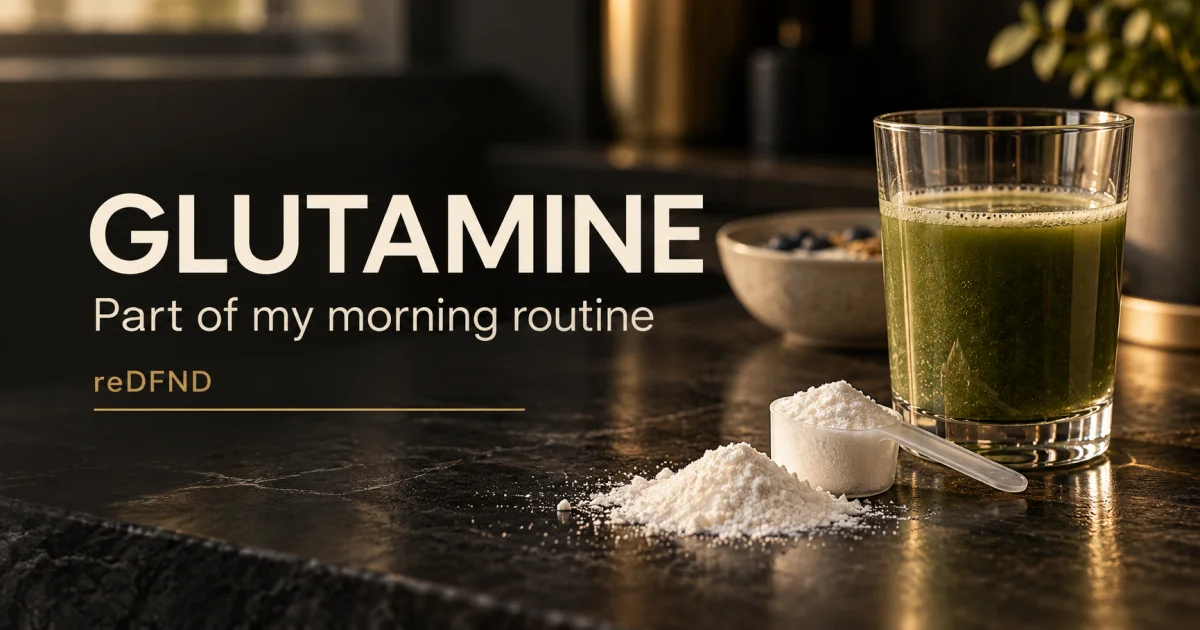
Glutamine is one of those things. Around 5g, mixed into my super-greens shake, usually before breakfast. It isn’t particularly exciting, but it has been a consistent part of my mornings since July 2025.
That was when I switched from training with Matty to working with Carol. Alongside a new training programme came a more structured nutrition plan, including a list of supplements. Glutamine was on that list, introduced with digestive support and recovery in mind.
What is glutamine?
Glutamine is an amino acid - a building block of protein - which your body normally produces itself. You also obtain it through protein-containing foods.
It has several important functions, including serving as fuel for cells in the intestine and immune system. Under certain conditions, such as serious illness or injury, the body’s requirements can exceed what it can produce.
However, an important distinction runs through this article: something having an essential role in the body doesn’t automatically mean taking extra will improve that function. [1]
That is where the evidence for supplementation needs to be considered separately.
How it fits into my day
I usually take around 5g of glutamine in a shake with super greens, aiming to make it the first thing I consume before food.
That describes my routine rather than a recommendation that everyone should take the same amount or take it on an empty stomach.
The greens were already part of my mornings before Carol introduced glutamine. My mate Ken - “Coach” Ken - recommended them early in my fitness journey. He described the taste as something I might need to acquire. In practice, the flavoured versions have been quite palatable. Berry Burst and Mandarin are both perfectly manageable.
It looks like pond water. Thankfully, it doesn’t taste like it.
The greens deserve an article of their own, because what they contain - and what can reasonably be claimed about them - depends on the particular product.
Have I noticed better recovery?
Possibly, but it is difficult to give glutamine the credit.
My training has stepped up massively compared with twelve months ago. Despite that, my recovery has remained fairly consistent. I am managing a much more demanding programme, which is encouraging.
But glutamine arrived alongside changes to my training, nutrition and overall approach. My body has also had more time to adapt to regular exercise.
I can describe what has happened. I can’t reliably tell you which part of the routine deserves which share of the credit.
Research reflects some of that uncertainty. A few small studies have reported improvements in soreness or aspects of recovery, but the evidence does not establish glutamine as a reliable way to improve strength, muscle growth or overall exercise performance in healthy adults. [1]
What about digestive support?
This was one of the reasons glutamine was introduced into my plan.
There is a biological basis for studying it: cells lining the intestine use glutamine. Some clinical research has also found benefits in particular digestive conditions.
For example, a trial reported improvements in people with diarrhoea-predominant IBS following an intestinal infection, who also had increased intestinal permeability. That was a specific patient group receiving a defined treatment regimen. It doesn’t establish that my morning 5g shake improves digestion in otherwise healthy people. [2]
For me, digestive support was part of the rationale for taking it. I don’t have a clear personal before-and-after result to report.
And immune support?
I rarely get colds or flu-like illnesses, despite spending plenty of time around other people in gyms and saunas.
It would be tempting to connect that with a supplement. But staying well doesn’t tell me why I have stayed well.
Although glutamine plays a role in immune-cell function, research provides little support for the claim that supplementation prevents upper respiratory infections in exercising adults. [1]
I wouldn’t present my experience as evidence that it prevents illness.
My view
Glutamine remains part of the nutrition routine I follow with Carol. I haven’t noticed side effects, and taking it with my morning shake is straightforward.
But I don’t put every supplement in the same category. Creatine has stronger evidence for supporting the kind of strength training I do. The case for glutamine supplementation in healthy people is less clear.
I’m comfortable acknowledging that.
For me, sharing my journey means describing what I take, why I started and what I have noticed - while being equally honest about what I don’t know.
Before you try it
This article describes my personal experience rather than personalised medical advice. Speak to a qualified healthcare professional before starting a supplement, particularly if you have an ongoing medical condition, take regular medication, or are pregnant or breastfeeding.
Not noticing side effects myself doesn’t establish that a supplement is suitable for everyone. Persistent digestive symptoms also deserve proper assessment rather than an assumption that a supplement will resolve them.